1. Sourcing
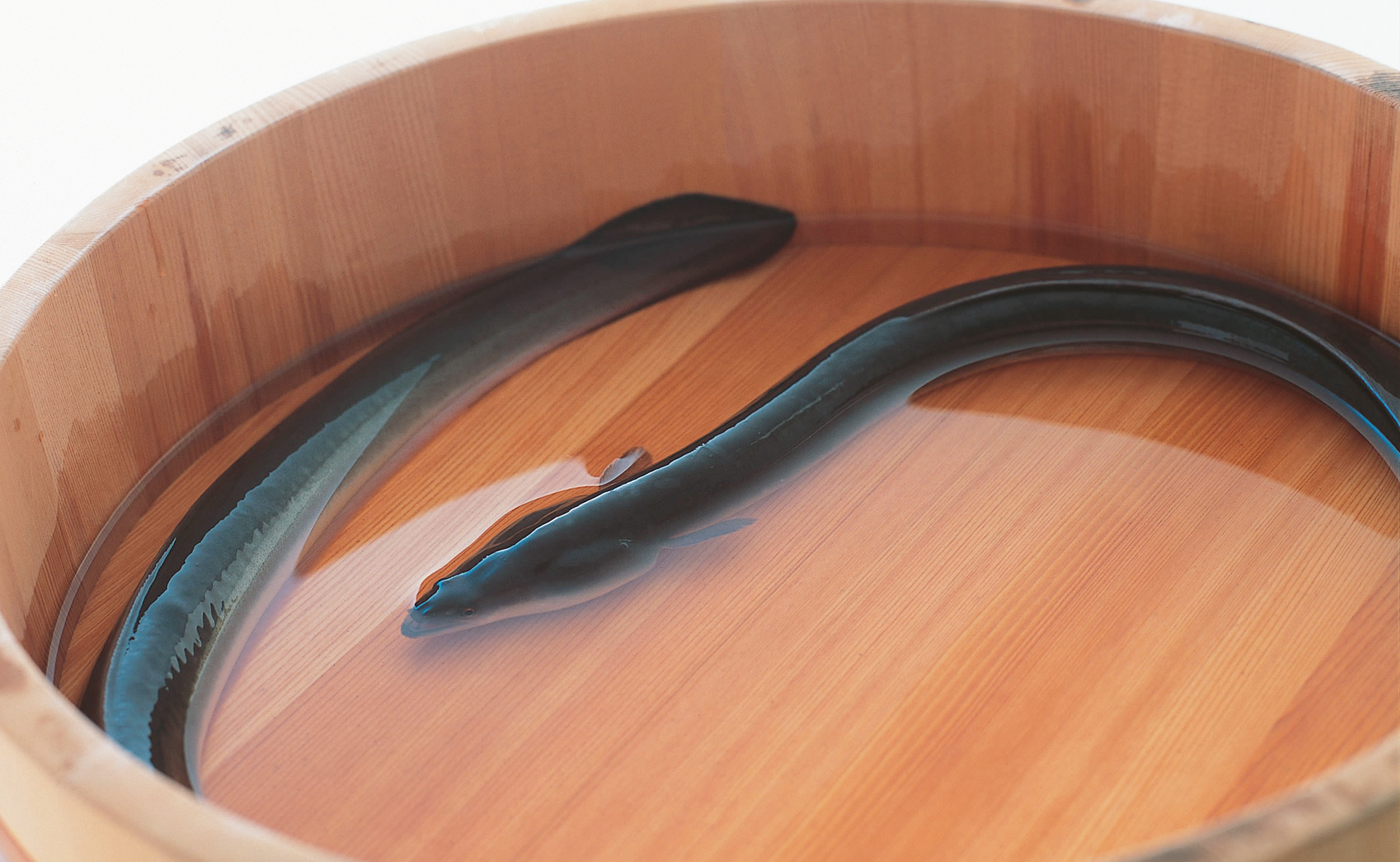
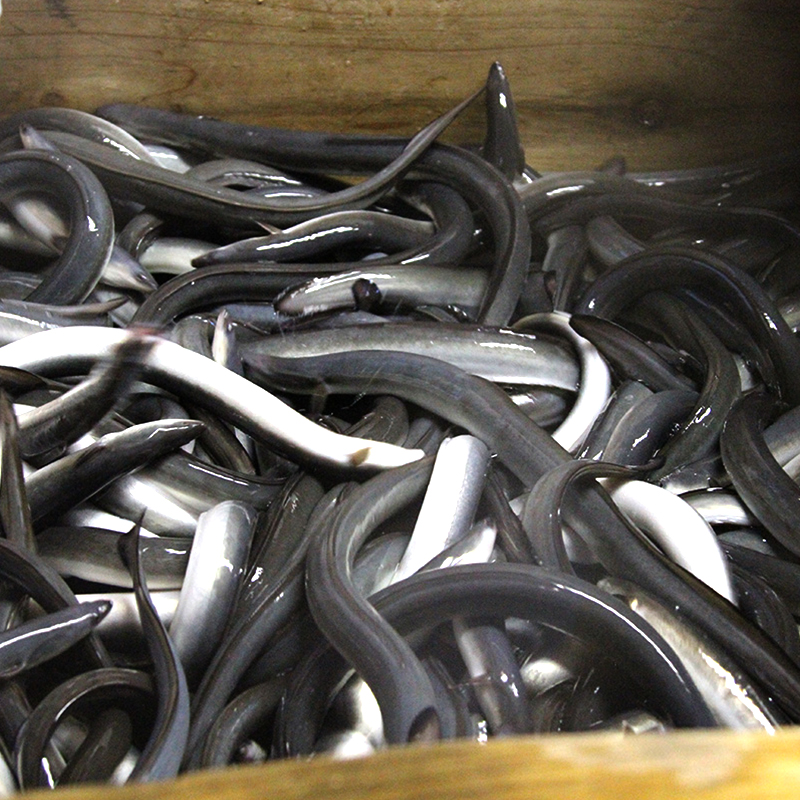
Alive and in good hands from day one
We don't buy through middlemen. Our team visits unagi farms across western Japan — Aichi, Mie, Tokushima, Kochi, Ehime, Kagawa, Miyazaki, and Kagoshima — checking the ponds in person and choosing what's in peak condition for the season. The unagi travel to our facility alive. That's where the quality starts.
2. Purging
Clearing the earthy taste before anything else
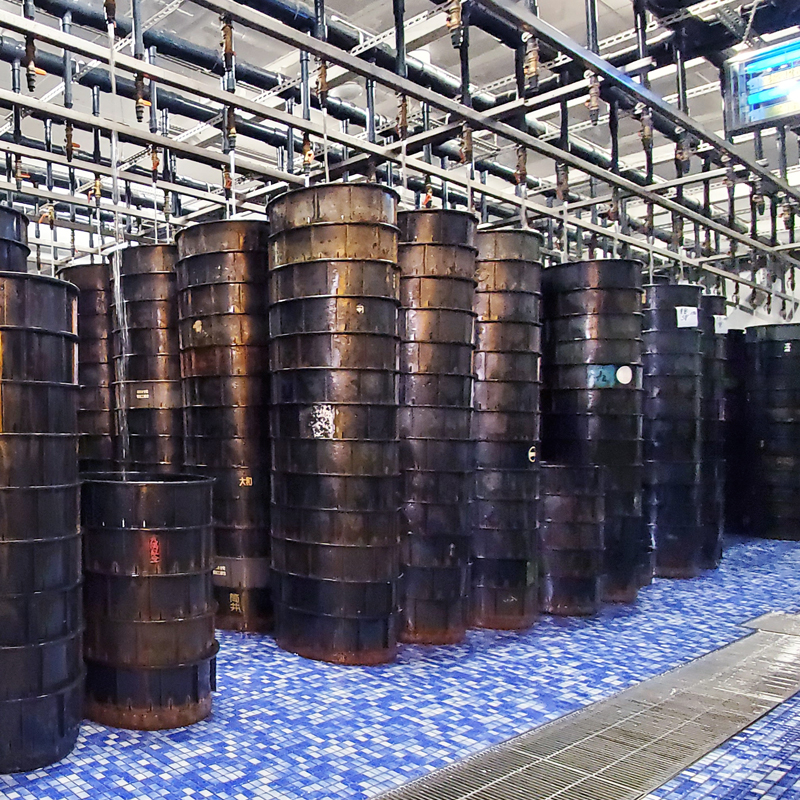
Freshwater fish can carry an earthy, muddy flavor — and unagi is no exception. On arrival, our unagi go straight into holding tanks filled with clean groundwater to draw that muddiness out. Our craftsmen taste-test every batch — for flavor, for texture, and for any trace of that earthy note. If even one of them isn't satisfied, the unagi goes back into the tank rather than on to cooking.
During purging the unagi aren't fed, so they steadily lose weight — which changes their size and even affects the final grill. We accept that trade-off, because purging matters more to us. Even unagi with great flavor and texture falls short if that muddy note lingers, and many people who think they dislike unagi are really put off by that very smell. We insist on thorough purging so that everyone can enjoy unagi the way it's truly meant to taste.
3. Filleting
Ten seconds a fillet. A lifetime to learn.
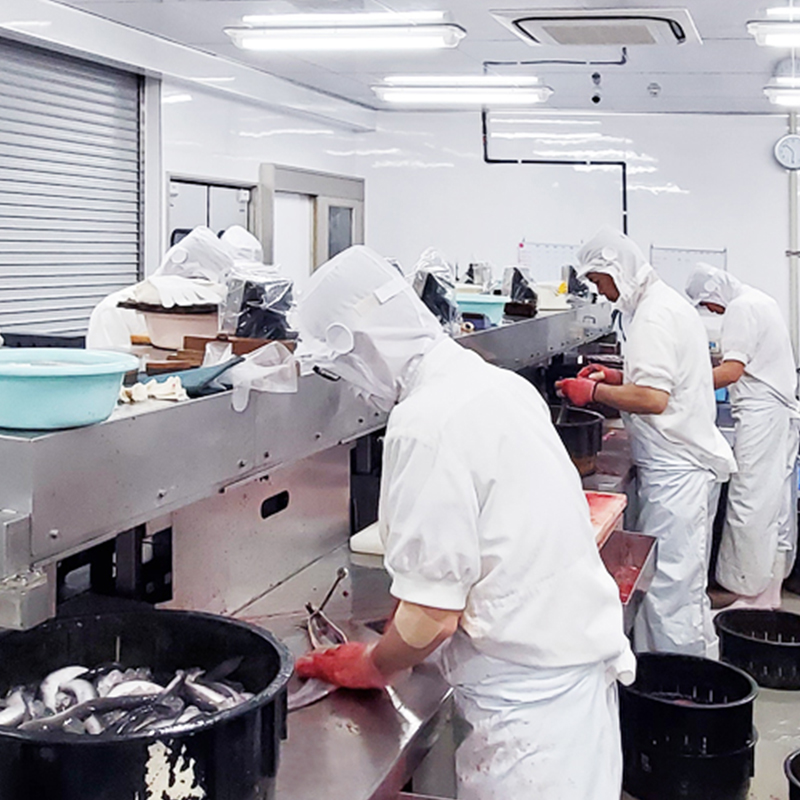
Our craftsmen have been doing this for decades. Each unagi is split, filleted, and shaped in seconds — working to leave as few bones as possible and to get the shape just right. It's a crucial step that shapes how the unagi grills in the end. It sounds fast, and it is — but the skill behind it takes years to build, and no machine can replicate it.
4. Our Sauce
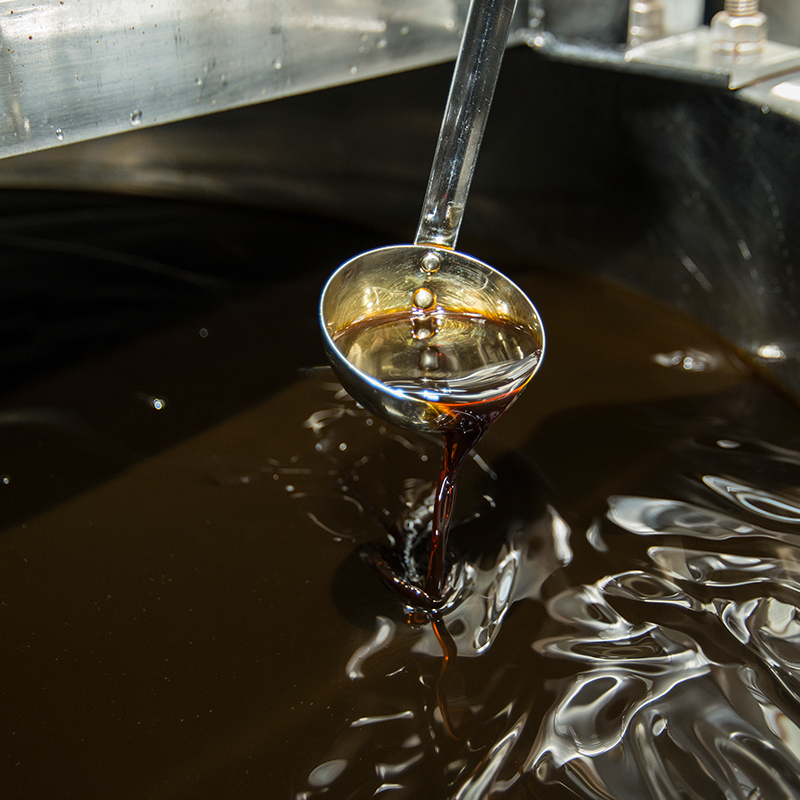
A house-made tare, perfected over years of trial and error
Every tare we use — for grilling and for the table — is made in-house. The glaze that decides the flavor of our kabayaki is the result of years of trial and refinement: our own secret sauce. It's popular enough that some customers come just to buy the tare on its own.
5. Grilling
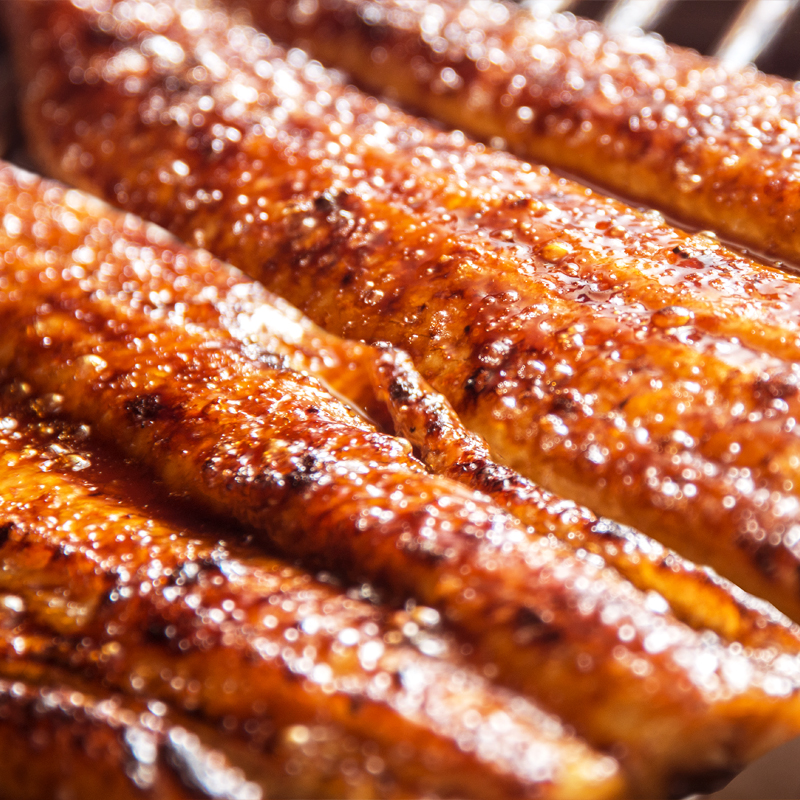
Grilled plain, steamed, then glazed three times over
First we grill the fillet plain (shirayaki). This renders out excess fat and moisture, concentrating the unagi's flavor and helping the sauce take. Next comes steaming, followed by three rounds of grilling — each with one of three house-made tare, for seasoning, for color, and for the final glaze.
Because we work with unagi from many different regions, the quality shifts with the source and the season, so heat and timing are adjusted for every batch. More than fifty years devoted to unagi is what keeps the result consistent.
6. Packing & Shipping
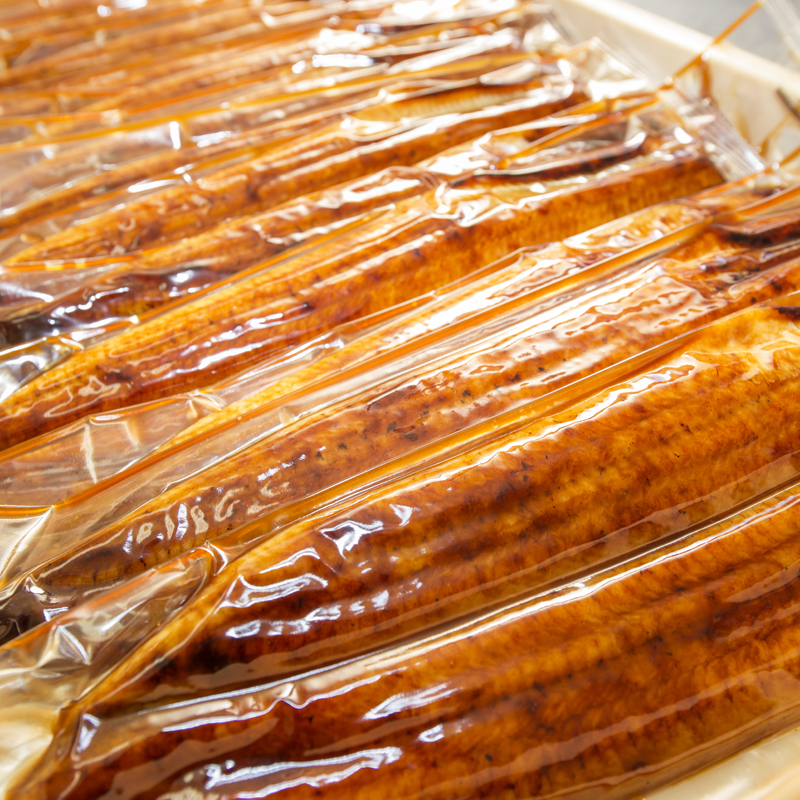
Frozen and sealed at peak, shipped nationwide
Right off the grill, each piece is frozen and vacuum-sealed — locking in exactly the flavor we worked to create. In a sanitary clean room, every kabayaki is checked with detection equipment, then held in a strictly temperature-controlled freezer. Everything is made in-house and delivered to our business partners, and to customers across Japan through our online stores.